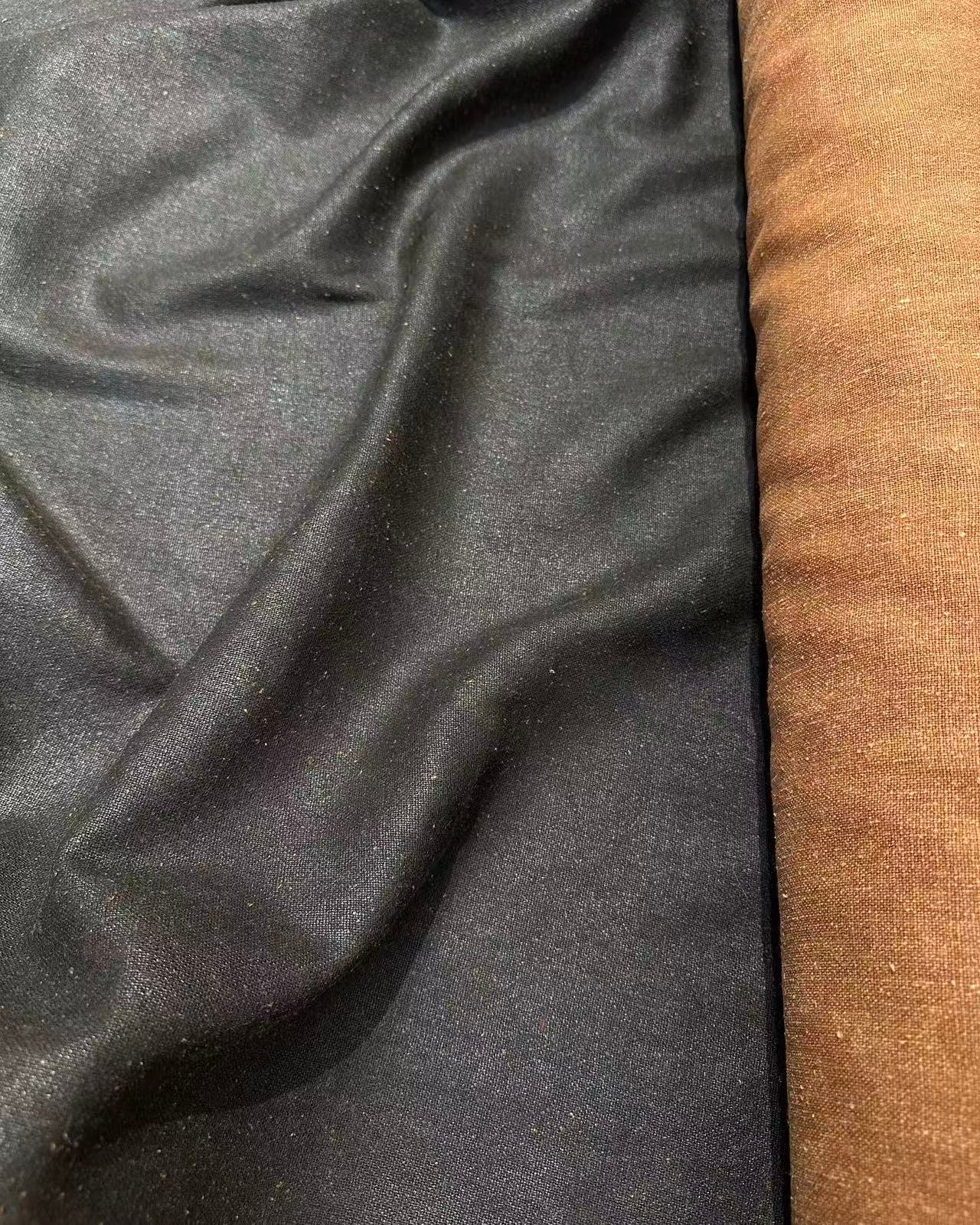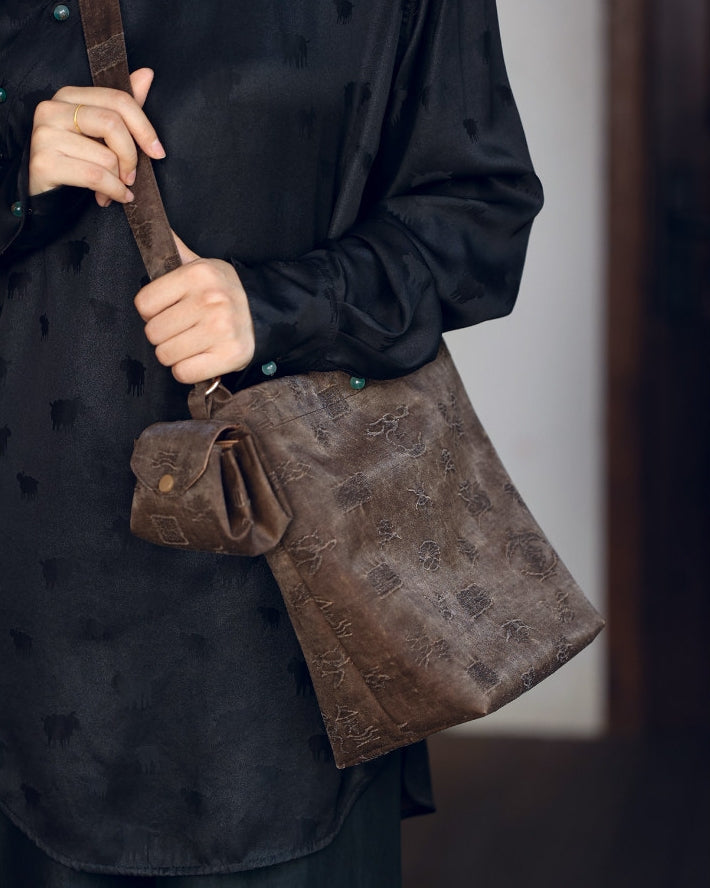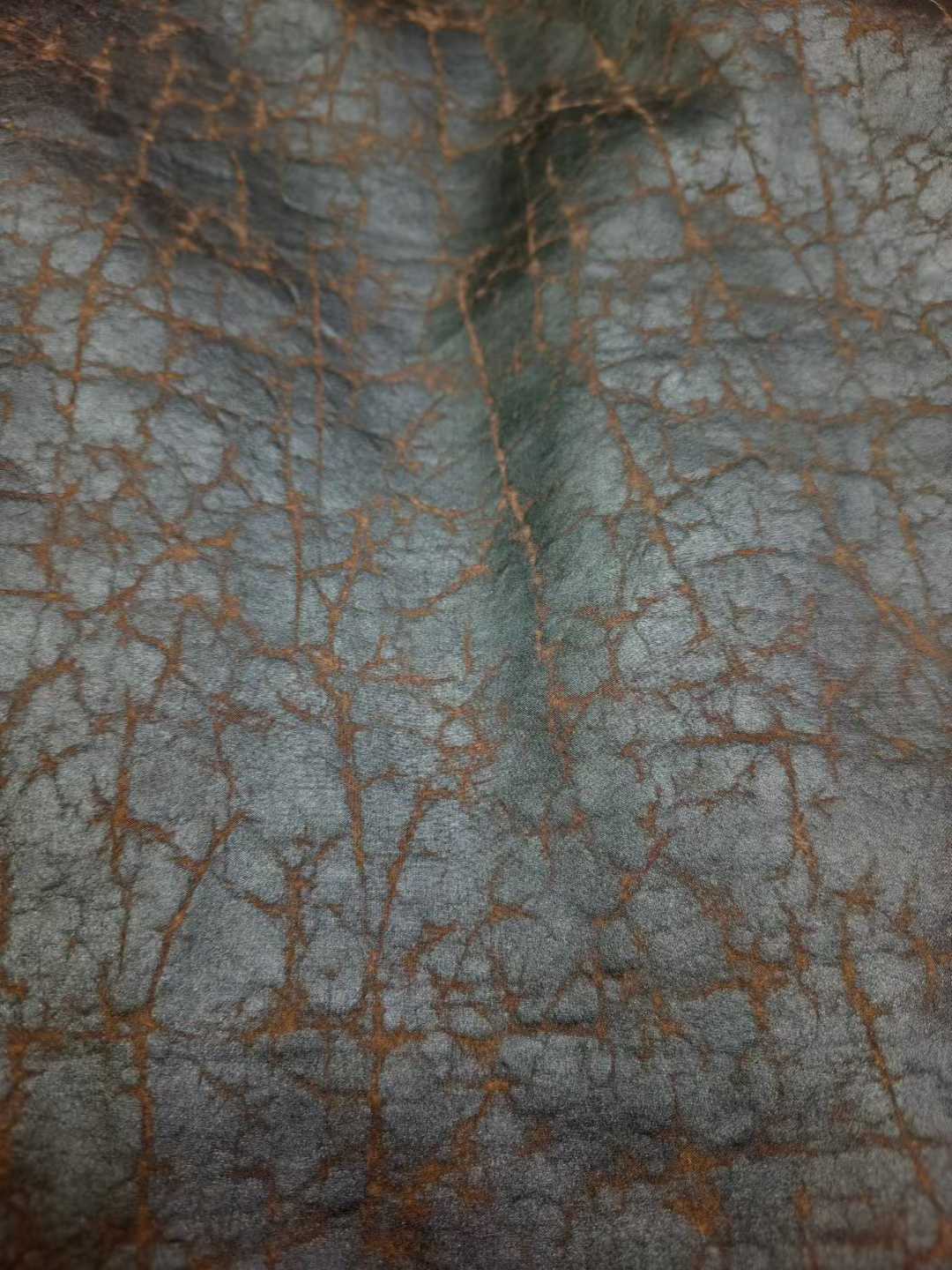
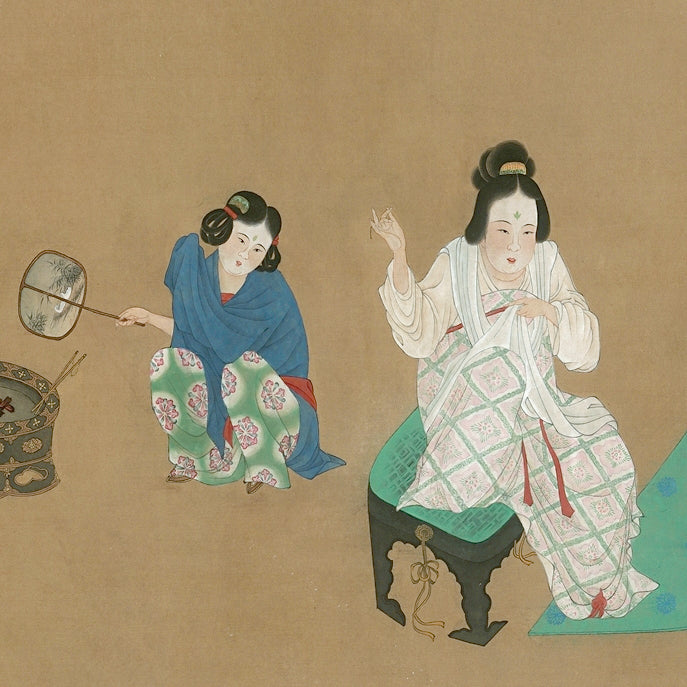

In Chinese silk language, Ling, Luo, Chou, and Duan are more than four fabric names. Together, they represent a classical way of reading silk through weave, surface, density, light, and hand feel.
The phrase ling luo chou duan is often used in Chinese to suggest beautiful and refined silk fabrics. Yet each word also carries its own material meaning.
To understand these terms is to see Chinese silk not as one luxury fabric, but as a world of structures — each with its own rhythm, movement, and character.
A Classical Language of Silk
Modern fabric descriptions often use names such as satin, chiffon, organza, crepe, charmeuse, and velvet. These terms are useful, especially for international buyers.
Chinese silk has its own older language. It describes fabric not only by appearance, but by how it is built: whether the weave is diagonal or open, whether the surface is smooth or luminous, whether the cloth feels fluid, crisp, dense, or airy.
Ling, Luo, Chou, and Duan are four important words within this language.
Ling / 绫 — Twill Silk
Ling refers to twill silk.
Its surface usually carries a subtle diagonal structure, created by the movement of warp and weft threads. This gives Ling a sense of order and quiet texture, often more composed than plain-weave silk and less glossy than satin.
Ling may appear refined and restrained. Its beauty is not loud; it lies in the woven rhythm of the cloth.
In garment use, twill silk can offer a gentle balance of softness and structure. It may drape with ease while still keeping a composed surface.
Luo / 罗 — Twisted-Warp Silk
Luo refers to twisted-warp silk, often understood internationally through the language of leno structure.
In Luo weaving, warp threads twist and cross around one another, creating stable open spaces within the fabric. The result is light and breathable, but not loose. The openness is held by the structure itself.
This makes Luo different from ordinary sheer silk. Its airiness is not simply caused by thin yarns; it is created through a deliberate woven architecture.
Luo carries one of the most distinctive forms of Chinese silk intelligence: lightness made stable through structure.
Chou / 绸 — Woven Silk Cloth
Chou is a broader silk term.
It often refers to closely woven silk cloth with a smooth, composed surface. In many contexts, chou can also be used more generally to describe silk fabric itself.
Because the word is broad, its exact meaning depends on context. It may suggest practical elegance, woven density, smoothness, or simply fine silk cloth.
Within the phrase ling luo chou duan, Chou gives balance to the group. It is less specific than Ling or Luo, but it carries the idea of silk as a complete and usable cloth — refined, finished, and ready for life.
Duan / 缎 — Satin Silk
Duan refers to satin-weave silk.
It is known for its smooth surface and quiet luminosity. The satin weave allows more yarn to float on the surface, giving the fabric a softer shine and a more polished hand feel.
Compared with Ling, Duan often appears more luminous. Compared with Luo, it is denser and smoother. Compared with Chou, it is more clearly defined by surface sheen and satin structure.
Modern silk satin and silk charmeuse are the closest international references, though the exact character always depends on weight, density, fibre, and finishing.
Four Words, Four Ways of Reading Silk
These four terms help us understand how Chinese silk was traditionally read through structure:
- Ling / 绫 — twill silk, with a diagonal woven rhythm.
- Luo / 罗 — twisted-warp silk, with stable openwork.
- Chou / 绸 — woven silk cloth, smooth, composed, and broad in meaning.
- Duan / 缎 — satin silk, smooth, luminous, and elegant.
Together, they show that silk is not defined by fibre alone. Two fabrics may both be silk, yet behave entirely differently in the hand and on the body.
The Structure Behind Elegance
The beauty of Chinese silk often begins before colour, pattern, or decoration. It begins with construction.
A twill silk holds rhythm. A twisted-warp silk holds air. A satin silk holds light. A closely woven silk cloth holds quiet daily elegance.
This is the strength of the classical silk language: it teaches us to notice the structure behind the surface.
A Living Part of Chinese Silk Heritage
Ling, Luo, Chou, and Duan belong to the long material history of Chinese silk — a history shaped by fibre, hand, loom, climate, and time.
For centuries, Chinese silk was one of the great luxuries of the world. It travelled through trade, diplomacy, and desire, carrying the imagination of China across continents and into courts, wardrobes, interiors, and collections far beyond its place of origin.
At CROSE, we return to these terms not as distant vocabulary, but as a living way to understand fabric. The wisdom of Chinese silk once nourished the lives of those who came before us; today, we hope it can continue to nourish modern life through touch, comfort, movement, and the quiet dignity of natural materials.