
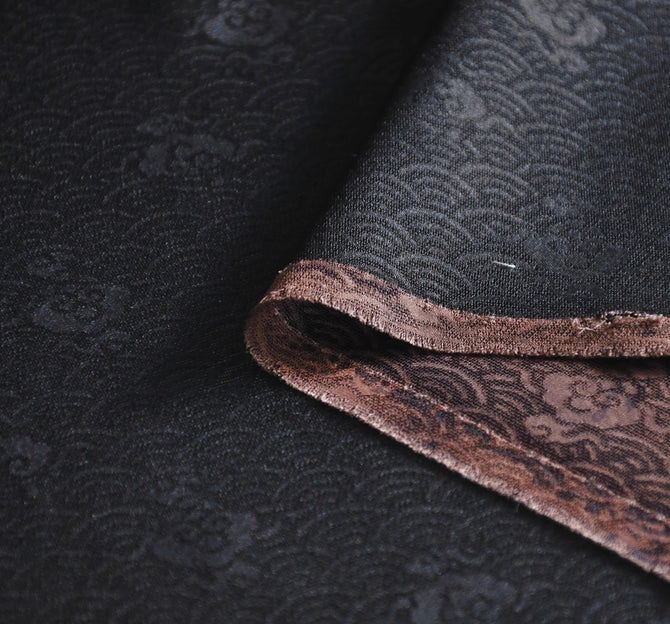
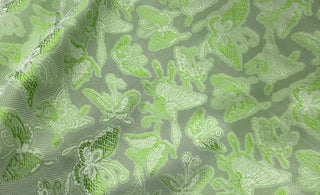


Chinese silk, with a history spanning over 5,000 years, is not only a treasure of Chinese traditional culture but also a shining business card in the global textile industry. Its exquisite craftsmanship, diverse categories, and unique textures have won worldwide admiration. Understanding the classification of Chinese silk and the differences between similar fabrics is crucial for both professionals in the textile field and silk enthusiasts. This blog will take you into the world of Chinese silk, explaining its traditional classification system (with corresponding English terms used in customs export) and focusing on distinguishing between two easily confused lightweight silk fabrics: Sha (Gauze Silk) and Xiao (Sheer Silk).
I. The Traditional Classification System of Chinese Silk (with Chinese - English Comparison)
In the traditional classification of Chinese silk, pure silk fabrics are divided into 14 major categories based on factors such as weaving structure, texture, and appearance. Each category has its unique characteristics and corresponding English terms commonly used in customs export, which is of great significance for international trade and cultural communication.
|
Chinese Category
|
English Term
|
Core Characteristics
|
Typical Varieties
|
|
纺类
|
Plain - weave Silk Fabrics
|
Adopt plain weave, warp and weft generally have no twist or weak twist, the fabric surface is flat and straight, light and tough.
|
Habotai Silk (电力纺)
|
|
绉类
|
Crepe Silk Fabrics
|
Warp or weft is strongly twisted, or both warp and weft are strongly twisted, showing obvious creases and elasticity.
|
Crepe de Chine (双绉), Georgette (乔其)
|
|
绸类
|
Silk Fabrics
|
Use plain weave or modified weave, warp and weft are closely interlaced.
|
Embroidered Silk (织绣绸)
|
|
缎类
|
Satin Fabrics
|
Apply satin weave, the fabric surface is smooth and shiny.
|
Silk Charmeuse (素绉缎)
|
|
绢类
|
Spun Silk Fabrics
|
Fine, flat and neat texture.
|
Taffeta (塔夫绸)
|
|
绫类
|
Twill Silk Fabrics
|
Use twill weave or modified twill weave, the fabric surface shows obvious diagonal lines.
|
Silk Twill (斜纹绸)
|
|
罗类
|
Leno Silk Fabrics
|
Woven by twisting warp threads (A and B) at intervals of one or more odd weft threads, with mesh holes.
|
Hangzhou Luo (杭罗)
|
|
纱类
|
Gauze Silk Fabrics
|
All or part of the fabric uses gauze weave, with warp threads (A and B) twisted at intervals of one weft thread.
|
Reed Gauze (芦纱)
|
|
绡类
|
Sheer Silk Fabrics
|
Use plain weave or leno weave, with transparent and lightweight texture.
|
Striped Sheer Silk (条花绡), Silk Organza (真丝欧根纱)
|
|
葛类
|
Ge Silk Fabrics
|
Fine warp and thick weft, thick texture, with horizontal shuttle lines on the fabric surface.
|
Wenshang Ge (文尚葛)
|
|
呢类
|
Wool - like Silk Fabrics
|
Thick texture, with a wool - like feel.
|
Plain Fancy Wool - like Silk (素花呢)
|
|
绒类
|
Velvet Silk Fabrics
|
The fabric surface is covered with fluff or loops.
|
Georgette Velvet (乔其绒)
|
|
绨类
|
Ti Silk Fabrics
|
Filament as warp and cotton or other yarns as weft, relatively thick texture.
|
Plain Ti Silk (素绨)
|
|
锦类
|
Brocade Silk Fabrics
|
Exquisite, colorful and gorgeous yarn - dyed jacquard fabrics.
|
Brocade Satin (织锦缎)
|
II. A Detailed Comparison Between Sha (Gauze Silk) and Xiao (Sheer Silk)
Among the 14 major categories of Chinese silk, Sha and Xiao are both lightweight silk fabrics, which are often confused due to their similar light and transparent characteristics. However, there are clear differences between them in terms of weaving structure, core features, typical varieties, and uses.
1. Core Difference: Weaving Structure and Craft Logic
The essential difference between Sha and Xiao lies in their "weaving structure", which directly determines the physical properties of the fabrics.
|
Comparison Dimension
|
Sha (Gauze Silk)
|
Xiao (Sheer Silk)
|
|
Core Weaving Structure
|
Mainly adopts "leno weave" (partly including plain weave). Warp threads A and B are grouped together, and twisted with each other every other weft thread, forming a regular "mesh hole" structure. The mesh holes are mostly "twisted holes" (the shape of the holes is slightly irregular due to the twisting of warp threads).
|
Mainly adopts "plain weave" (partly including simple leno weave). Warp and weft threads are interlaced according to the plain weave rule of "one up and one down", or only a small amount of leno weaving process is used for assistance. The mesh holes are "interlaced holes" (the shape of the holes is more regular, square or rhombus, without obvious twisting marks).
|
|
Key Craftsmanship
|
Relies on the "leno warp" process (warp threads need to be grouped and twisted in advance). The weaving difficulty is slightly higher, and the "twisting feeling" of the mesh holes is the core identifier.
|
Focuses on "lightweight plain weave". Transparency is achieved by selecting extremely fine warp and weft threads and reducing the warp and weft density. The "regularity" of the mesh holes is the core identifier.
|
2. Intuitive Differences: Texture, Appearance, and Uses
The difference in weaving structure further translates into differences in the fabric's hand feel, visual effect, and applicable scenarios.
(1) Texture and Touch
- Sha (Gauze Silk): Due to the twisting of warp threads, although the fabric is lightweight, it has a slight "stiffness and elasticity". When touched, you can feel the "three - dimensional sense" of the mesh holes (for example, when you pinch it and let it go, it will rebound quickly without leaving obvious creases). Typical examples include Hangzhou Luo (a representative of traditional Sha fabrics, with a neat and not flabby hand feel and twisted mesh holes) and Reed Gauze (with a slightly soft hand feel but still elasticity brought by twisting).
- Xiao (Sheer Silk): Mainly interlaced with plain weave, the fabric is "softer, smoother and more skin - fitting", with weak stiffness and stronger drapability. When touched, the texture is more delicate and smooth, similar to a "lightweight silk paper" (it is easy to leave slight creases after pinching and needs careful care). Typical examples include Silk Organza (often mistakenly called "Organza", but actually belongs to the Xiao category, with softness, smoothness and transparency) and Striped Sheer Silk (with fine stripes on the surface and a delicate touch without elasticity).
(2) Appearance and Transparency
- Sha (Gauze Silk): The mesh holes are in an "irregular and fragmented shape" due to twisting. When light passes through, there will be a slight "hazy feeling" (the light will be slightly scattered when passing through the twisted holes). The overall luster is "soft and matte" and not dazzling. For example, for traditional Hangzhou Luo fabrics, when viewed in the sun, the mesh holes are not neat squares but fragmented holes with twisting marks, which look more ancient and simple visually.
- Xiao (Sheer Silk): The mesh holes are in a "regular geometric shape" (such as square, rhombus), with stronger transparency and more "transparent and straightforward" (light can pass directly through the regular mesh holes). The fabric luster is "clear and bright", and it looks more lightweight visually. For example, for Silk Organza, you can clearly see the neat small mesh holes when looking against the light, and the light passes through almost without scattering, making it extremely transparent.
(3) Typical Uses
- Sha (Gauze Silk): With both lightness and slight stiffness, and soft luster, it is more suitable for making "breathable layers of daily clothing or traditional clothing". For example:
- Summer shirts and dresses (wearing them is breathable and not stuffy, and has a certain neatness, which is not easy to stick to the body);
- "Pisha" (p 披着的纱) and "Shashan" (纱衫) of traditional Hanfu (such as Song - style yarn clothes, which balance the sense of elegance and practicality);
- "Yarn curtains" for high - end home textiles (transmitting light without dazzling, creating a soft indoor light).
- Xiao (Sheer Silk): With extreme lightness, transparency, brightness, and good drapability, it is more suitable for making "decorative layers of clothing or items that require a 'strong sense of transparency'". For example:
- "Decorative yarn layers" of dress skirts (such as the outer yarn of wedding dresses and the streamers of evening dresses, adding a sense of lightness and elegance);
- High - end silk scarves and shawls (lightweight and skin - fitting, with strong transparency, suitable for matching with formal clothes to brighten the shape);
- "Transparent decorative parts" of stage costumes (such as the sleeves and skirts of dance dresses, which are more flexible under the stage lights).
III. Conclusion
Chinese silk is a crystallization of the wisdom and craftsmanship of the Chinese nation. Its 14 major categories each have their own charm, and even similar fabrics like Sha and Xiao have their unique characteristics. By understanding the classification of Chinese silk and the differences between various fabrics, we can not only better appreciate the beauty of Chinese silk but also make more appropriate choices in the process of purchasing, using, or engaging in silk - related trade. Whether it is the soft and elastic Sha or the smooth and transparent Xiao, they all show the unique charm of Chinese silk and continue to write brilliant chapters in the global textile field.